
"Arabica Robusta blend"
500 article(s) found

Basic knowledge of all aspects of coffee decaf coffee
Linnaeus (Swedish naturalist) classifies coffee plants into the Rubiaceae family, such as gardenia. The great naturalist named it Coffea. Although wild plants can grow as high as 10-12 meters, the plantations are about 3 to 5 meters high, with the exception of Colombia, where tree species rarely exceed 2 meters. This makes farming and picking easier and more economical to cultivate. Leaves

A brief introduction to the treatment method of grinding and baking degree of Indonesian West Java boutique coffee beans with low acidity
In the 18th century, Indonesia became a major producer of coffee, and almost all of its high-quality Arabica coffee was supplied to Europe. But by the 19th century, coffee rust, which appeared in Ceylon in 1869, also affected Indonesia. By 1877, most of the coffee fields on the Indonesian islands had been damaged by rust, and the Dutch had to introduce other coffee varieties from Africa, namely Romsda.

Basic knowledge about all aspects of coffee-baristas must see
Linnaeus (Swedish naturalist) classifies coffee plants into the Rubiaceae family, such as gardenia. The great naturalist named it Coffea. Although wild plants can grow as high as 10-12 meters, the plantations are about 3 to 5 meters high, with the exception of Colombia, where tree species rarely exceed 2 meters. This makes farming and picking easier and more economical to cultivate. Leaves

A brief introduction to the cultivation of Arabica boutique coffee beans, geographical location, climate and altitude
Good Arabica? Coffee requires complicated manual picking, selection and meticulous processing, so are the most expensive and best coffee beans in the world? Arabica? Grow coffee. Robusta? Growing coffee is usually used to produce instant coffee and canned coffee because of its low cost. A few of the better ones? Robusta? Growing coffee is also used in blending (with Allah)

What is the purpose of Italian matching? there are no principles for matching.
Professional coffee knowledge exchange more coffee bean information please follow the coffee workshop (Wechat official account cafe_style) matching, just like a chemical formula. Did not say whose match is good, only suitable, not absolute. How many varieties and what proportion is more appropriate for Espresso blended coffee? First of all, we have to see, what is the purpose of Espresso blending coffee?

The choice of Italian coffee beans? What proportion is suitable for matching beans? What's the theory?
Professional coffee knowledge exchange more coffee bean information please follow the coffee workshop (Wechat official account cafe_style) the choice of Italian coffee beans? What proportion is suitable for matching beans? What's the theory? Many people like to drink lattes, and I am no exception. When I haven't come into contact with fine coffee, I only like to drink lattes all the time.

The most beloved country in the world
Following Cafe Review (official account vdailycom of Wechat) found that Beautiful Cafe opened a small shop of its own. If you want to ask the country or region that loves Roberta beans most, the first place is Italy, the hometown of espresso! If you narrow it down, to be more precise, the largest amount of robusta beans are used in southern Italy, such as Palermo.

Which is better, American coffee made by SOE or blended? How to choose coffee beans to order
Go into the cafe and order a cup of American style. What beans can you choose from? There are no more than two kinds of coffee beans used in the mainstream Italian style in today's cafes: blended or single-producing Italian SOE. So, what's the difference between these two kinds of coffee beans making espresso? Let's first talk about the traditional espresso, which we usually do.

The difference between Arabica and Robusta Coffee Basics
Arabica Coffee Beans Coffea arabica is known as Arabica coffee 70% of the worlds coffee production is from Arabica beans. Arabica coffee is grown in Central and North America, The Carribean, South America, Eastern Africa, Yemen, Papua New
Coffee beans compare the difference between Arabica and Robusta
Arabica Coffee Beans Coffea arabica is known as Arabica coffee 70% of the worlds coffee production is from Arabica beans. Arabica coffee is grown in Central and North America, The Carribean, South America, Eastern Africa, Yemen, Papua New
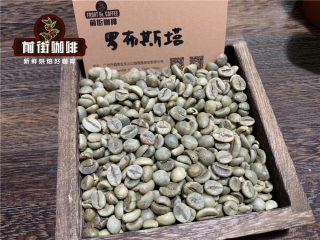
Robusta Fine Coffee Bean Flavor Description Manor Taste Features Introduction to the region
Robusta coffee has a much higher caffeine content than Arabica coffee, about 3.2%. In the general coffee market, many people like to compare Robusta coffee beans with Arabica coffee beans, which is incorrect. Robusta is actually a Congolese species

What grade is Arabica coffee beans? Picture Analysis of Variety characteristics and Flavor and taste characteristics of Arabica Fine Coffee beans
In many places where coffee is sold, it is not difficult to find words like "100% Arabica". Even canned coffee has a style called Arabica coffee, which makes one wonder: what is "Arabica coffee"? In fact, Arabica is the name of the coffee variety (species).

Which would you like to have latte beans? What's so unique about the coffee beans that must be deep-roasted with concentrated coffee?
With the advent of products such as single-origin and full-baked products, buying espresso beans is actually more complicated than in the past. Now Qianjie will tell you what you want to know about espresso beans. What's so unique about espresso beans? Most cafes use blended beans to make espresso, not just regular coffee, for several reasons:

How to confirm the distribution of the proportion of coffee blending
It is understood that Arabica coffee beans are harsh on planting conditions, they need to grow at higher elevations, fertile soil, sufficient moisture, moderate sunshine and shade conditions, and their ability to resist diseases and insect pests is poor; while Robusta, this kind of coffee beans, known as stout beans, can be grown at low elevations, and it is more resistant to diseases and insect pests. Maybe coffee lovers

Introduction to the Origin of Vietnam Coffee Bean characteristic Brand taste G7 Price Flavor description method
No.1: Culi and Robusta: usually coffee beans have two kernels, but Vietnamese Culi coffee refers to a round one-kernel coffee, compared with the usual coffee, Culi has a very strong flavor. Robusta is the most grown coffee in Vietnam, accounting for 80-90% of the production, this kind of coffee is mellow, slightly bitter, caffeine content about 2.5% 2: with two kinds of Robusta and Allah

Introduction to the blending method of Italian coffee with a little knowledge and sour taste
First, sour espresso blending method: Colombia 30%, Brazil 60%, Guatemala 10%, general mixed coffee blending method: Colombia 30%, Brazil 60%, Robusta 10%. Third, bitterness mixed commercial coffee blending method: Colombia 30%, Brazil 30%, Kilimanjaro 30%, Robusta 10%. There are two spellings of mixed beans: first bake and then mix
The difference between Arabica and Robusta
Arabica coffee beans coffee called 70% Arabica coffee world coffee produces Arabica coffee beans.

The difference between Arabica and Mantenin Coffee Bean introduction to the characteristics of Mantenin Coffee Bean
Professional coffee knowledge exchange more coffee bean information please follow the coffee workshop (Wechat official account cafe_style) when we drink coffee in a cafe, or when we buy coffee beans in a certain treasure, or even on the menu of some fast food chains, do we often see an advertisement like this?
The difference between Arabica and Robusta
In many places where coffee is sold, it is not difficult to find words like "100% Arabica". Even canned coffee appears in a style called "XX Arabica Coffee", which makes one wonder: what is "Arabica Coffee"?

Coffee common sense can coffee beans with two different flavors be blended?
Today, there are two main types of coffee grown in some of the most important producing countries: Arabica and Robusta. Several different species are obtained from the grafting of these two species, represented by the name of the producing country. Coffea Arabica, a valuable species, has been cultivated for centuries, accounting for 3/4 of the world's coffee production. As the name means, it